Renault Boreal

Rear-facing child seats
A baby’s head is, proportionally, heavier than that of an adult and its neck is very fragile. Transport the child in this position as long as possible (until the age of 2 at the very least). It supports both the head and the neck. Choose a bucket type seat for best side protection and change it as soon as the child’s head is higher than the shell.
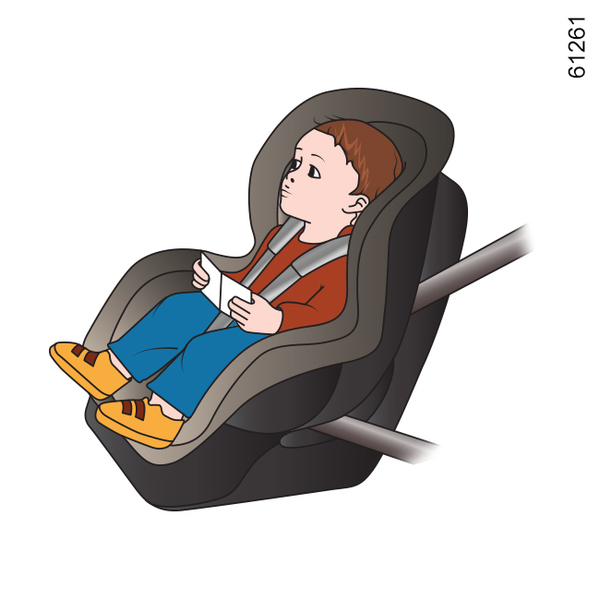
Forward-facing child seats
Children up to 18 kg or four years old must travel in a forward-facing child seat. Choose a seat according to the size of the child: head and abdomen, etc.
The child’s head and abdomen need to be protected as a priority. A front-facing child seat reduces the risk of an impact to the head. Ensure your child travels in a forward-facing seat with a harness for as long as their size permits. Choose a bucket type seat for optimum side protection.

Booster cushions
From 15 kg or 4 years, the child can travel using a booster seat, which will enable the seat belt to be adapted to their size and shape. The booster seat cushion must be fitted with guides to position the seat belt on the child’s thighs rather than the stomach. It is recommended to use a seat backrest that can have its height adjusted to position the seat belt in the middle of the shoulder. It must never rest on the neck or on the arm. Choose a bucket type seat for optimum side protection.
tip
List of the manufacturer's recommended methods for child restraint: