Rear bench seat: functions <?xml version="1.0" standalone="yes"?> To fold down the seatback A or BEnsure that the front seats are far enough forward.Before folding down a seatback: Chapter
Rear headrests <?xml version="1.0" standalone="yes"?> Position for useLift the headrest fully until it locks. Check that it is correctly locked.To remove the headrestRaise the headrest as far as it will go, then press button 1 and remove the headrest.To refit the headrest Chapter
Front seats <?xml version="1.0" standalone="yes"?>Settings To move the seat forwards or backwardsLift and hold the handle 1 to unlock the seat. Release the handle at the desired position and make sure that it is properly locked. Chapter
Front headrests <?xml version="1.0" standalone="yes"?>To raise the headrest Pull the headrest upwards to the desired height. Check that it is correctly locked.To lower the headrestPress the button 2 and guide the headrest down to the desired height. Chapter
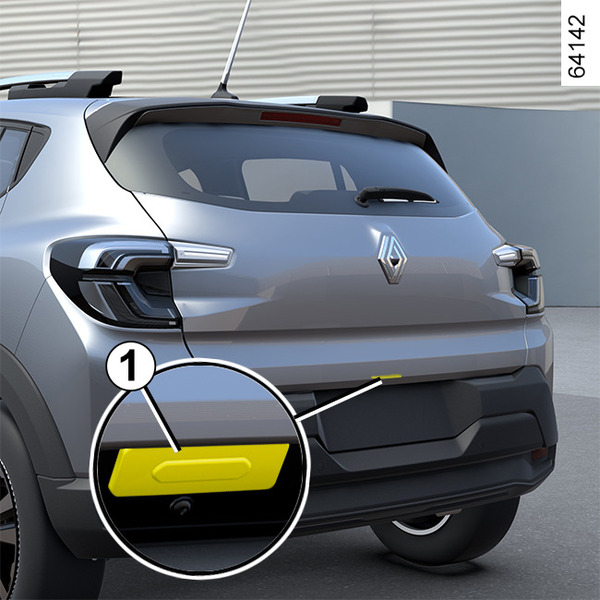
Luggage compartment <?xml version="1.0" standalone="yes"?> To openWith the doors unlocked, press button 1 and open the luggage compartment door.Press the button 2 (key or card) to unlock the luggage compartment only. Chapter
Automatic locking when driving <?xml version="1.0" standalone="yes"?>Operating principle After the vehicle is started, the system automatically locks the doors when you reach approximately 6 mph (10 km/h).The door can be unlocked: Chapter
Locking, unlocking the opening elements and doors <?xml version="1.0" standalone="yes"?>If the remote control or, depending on the vehicle, the card does not workIn some cases, the radio frequency remote control or the card may not work:card or radio frequency remote control battery worn or run flat, vehicle battery flat etc.use of appliances operating on the same frequency as the card (mobile phone, etc.);the vehicle is located in a high electromagnetic radiation zone.It is then possible: Chapter
Opening and closing the doors <?xml version="1.0" standalone="yes"?>Opening from the outside With the doors unlocked, place your hand under the handle 1 and pull it towards you Locking, unlocking the opening elements and doors. Chapter